The right system should fit the complete business, not only the checkout or counter.
Retail software can look impressive during a short demonstration. The difficult part is finding out whether it can handle your real business after the sales call ends.
A UAE retailer may sell through a website, mobile app, physical counter, Instagram or WhatsApp. The same order can involve add-ons, a greeting message, a payment link, branch stock, same-day delivery, a refund and a customer-service follow-up. If those steps live in separate systems, the feature list may be long while the daily workflow stays difficult.
DIRECT ANSWER
The best retail software for a UAE business is not automatically the platform with the most features or the lowest monthly price. It is the one that matches your complete order journey, supports the required AED, tax and payment process, handles Arabic and local delivery where needed, protects your data, scales with branches and gives you a clear contract, cost and exit path.
This guide is for UAE florists, gifting brands, cake shops, specialty retailers and delivery-first businesses that are comparing ecommerce, POS, inventory, order-management and delivery platforms.
For more context, see what a retail operating system is and how it differs from a standalone ecommerce website.
In this guide
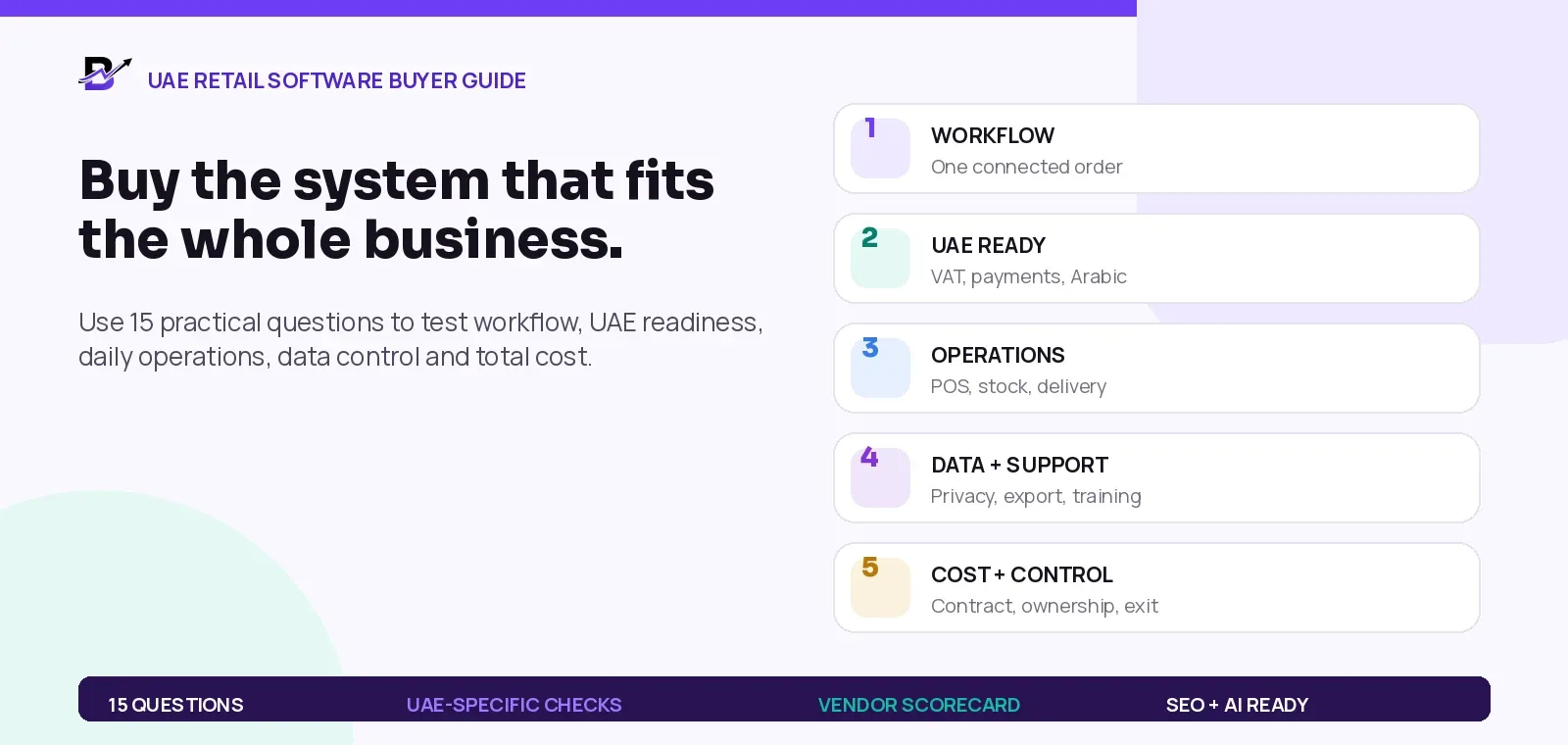
A five-part framework for evaluating retail software in the UAE
Fifteen questions covering workflow, VAT, eInvoicing, payments, Arabic, POS, stock, delivery and data
A simple 0-1-2 vendor scorecard
A live one-order test you can use during demonstrations
A transparent view of where Bloomlytix fits and what must still be confirmed
IMPORTANT
This is practical software-buying information, not legal, tax, accounting or data-protection advice. Confirm your obligations with qualified advisers and current UAE government guidance.
Start with one real order, not a generic feature tour
Before speaking to a vendor, write down one order that represents your daily complexity. Use a real product, real options, a real delivery area and the actual staff who touch the order. Ask the vendor to demonstrate that order from beginning to end.
For example, a two-branch florist may need a customer to choose a bouquet size, add chocolates, write a greeting message, select a delivery slot, pay online, have staff prepare the order, print the message, adjust stock, assign a driver, record delivery proof and show the sale in the owner report.
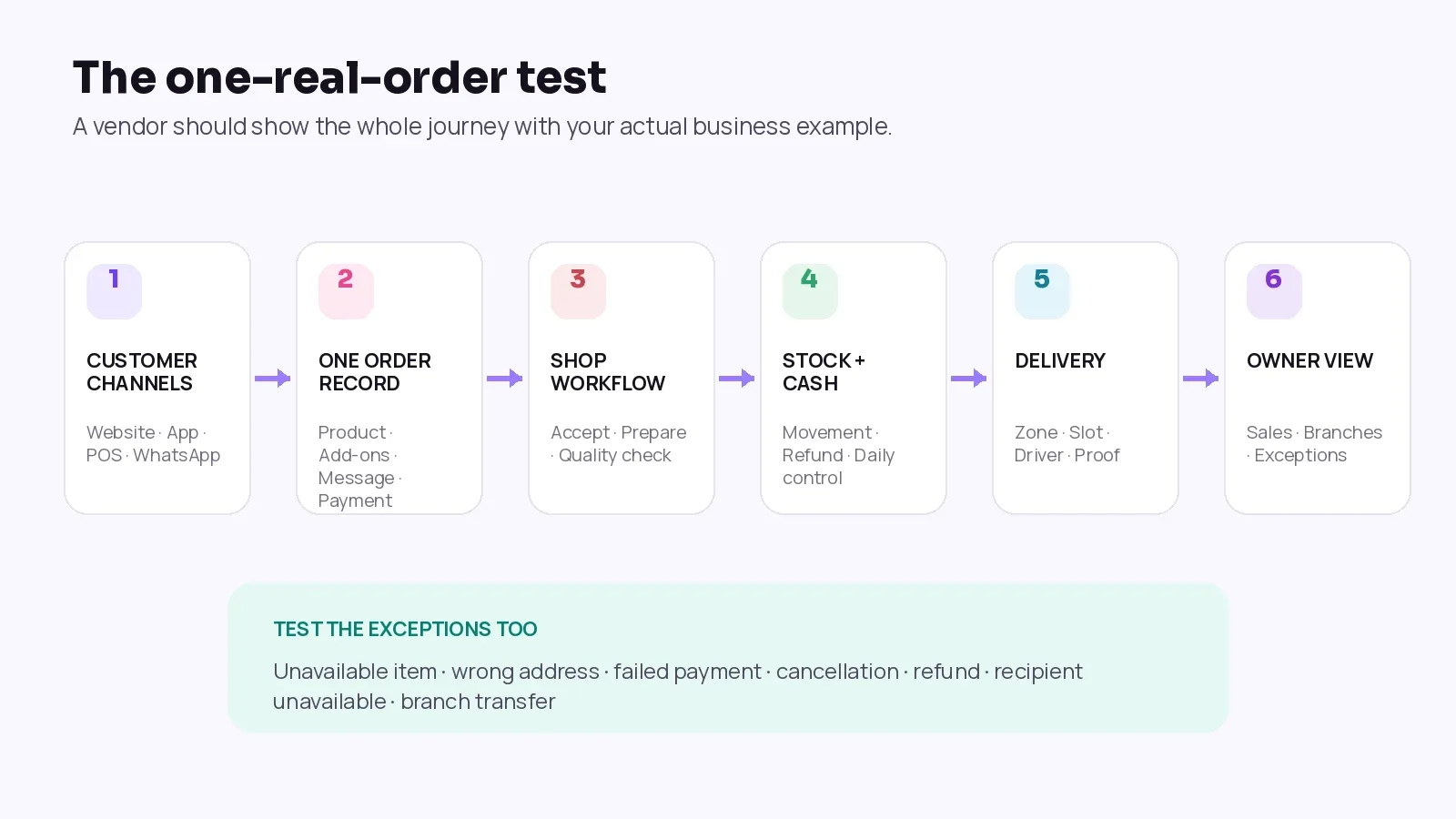
Figure 1. A useful demonstration follows one real order through every team and exception.
A STRONG DEMONSTRATION | A WEAK DEMONSTRATION |
|---|---|
Uses your product, branch, payment, delivery and exception rules. It shows what each user sees and which records update automatically. | Moves quickly through menus, uses perfect sample data and avoids refunds, failed payments, stock shortages or delivery problems. |
Use a simple 0-1-2 score
Score every question only after the vendor answers it in writing or shows it live. A promise such as “the system can probably do that” is not the same as confirmed scope.
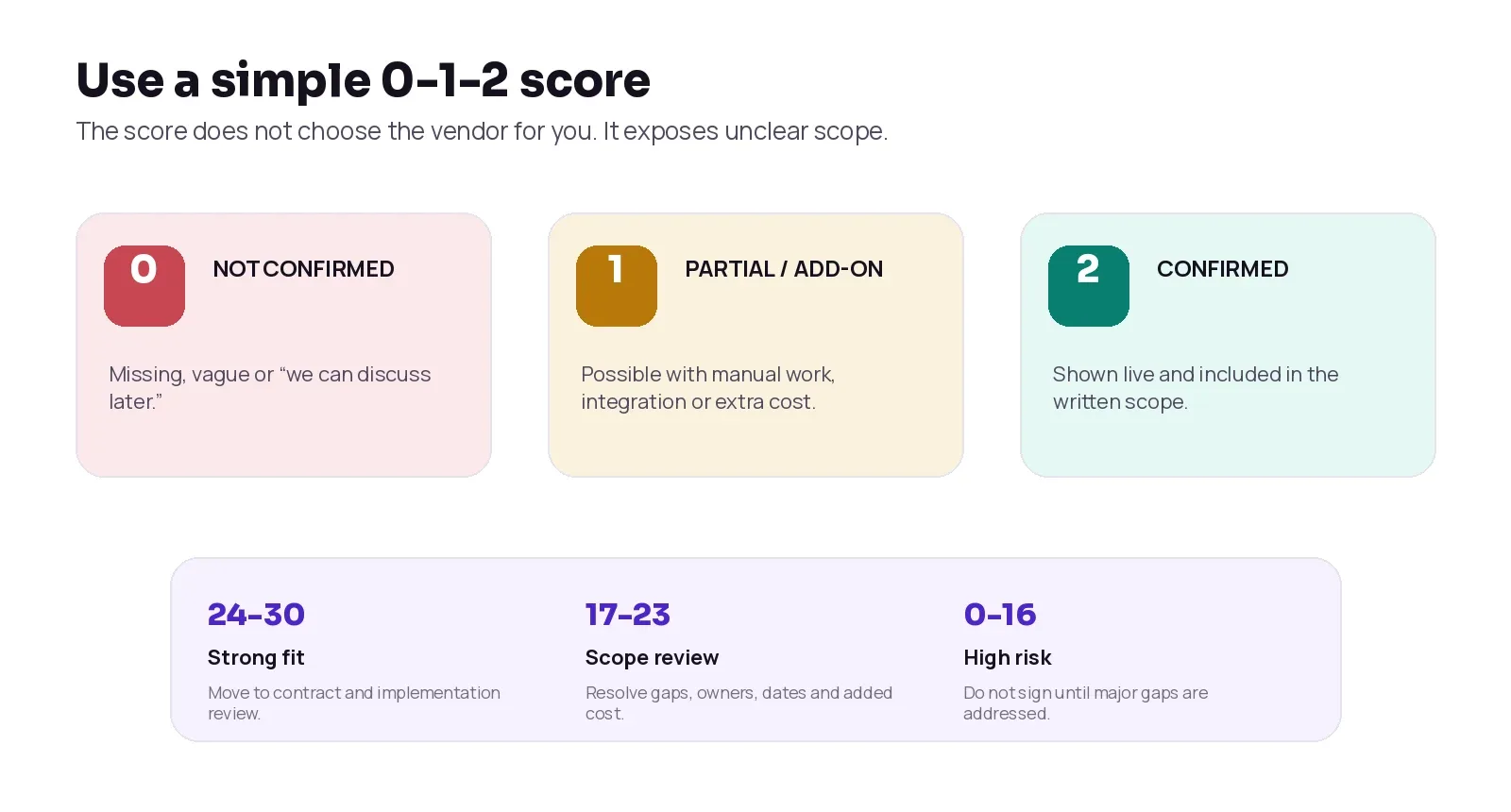
Figure 2. The score is a planning tool. Its purpose is to reveal unclear scope before the contract.
SCORE | MEANING | USE |
|---|---|---|
0 | Not confirmed | Missing, vague, unavailable or left for a later discussion. |
1 | Partial / add-on | Possible with manual work, an integration, custom development or additional cost. |
2 | Confirmed | Demonstrated with your workflow and included in the written proposal or standard scope. |
HOW TO READ THE TOTAL
A high score does not replace security, legal, implementation or contract review. A lower score does not always mean the product is wrong; it may mean the business needs a clear integration or phased rollout. Resolve every zero before signing.
The 15 questions at a glance
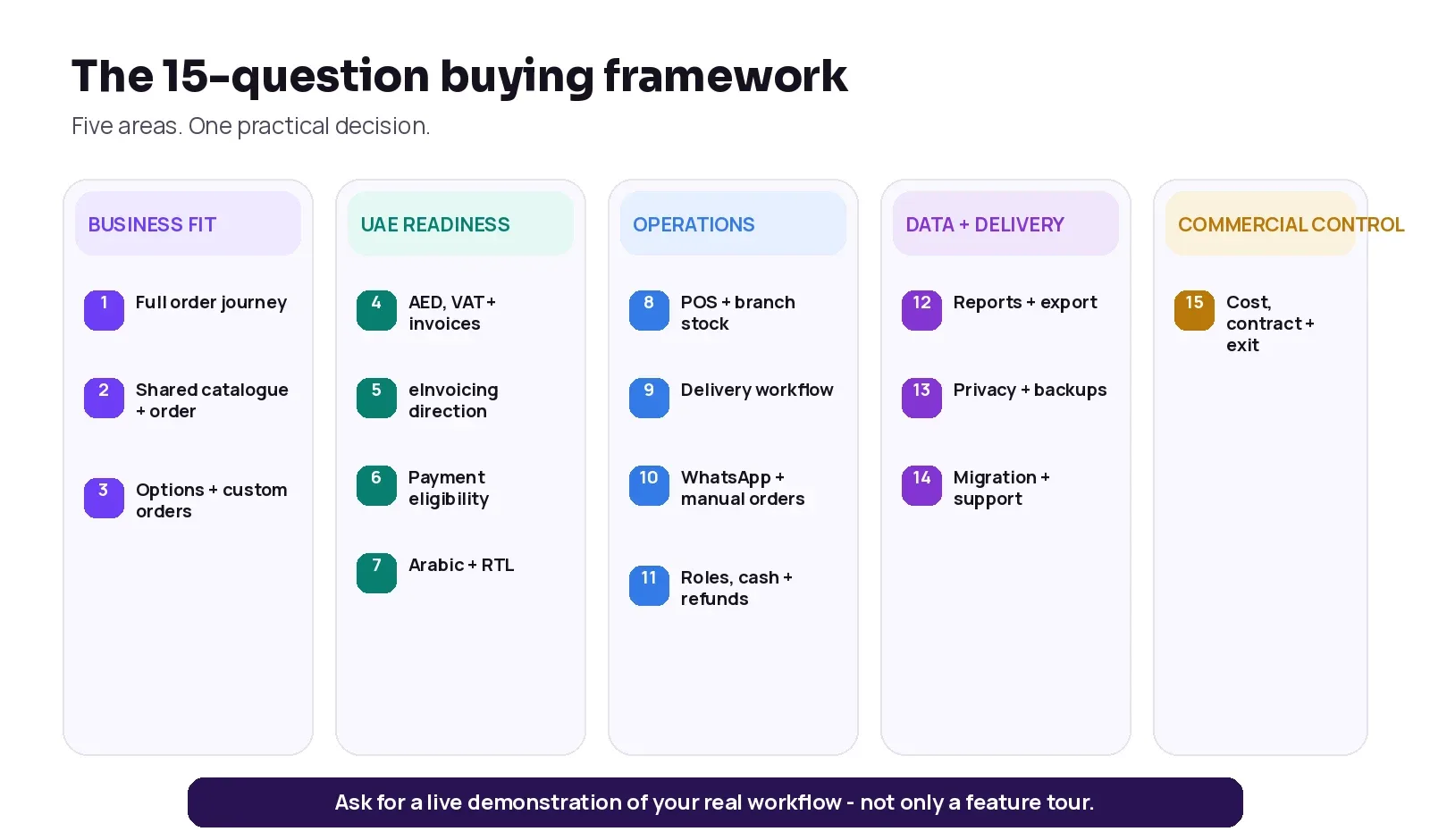
Figure 3. Evaluate business fit, UAE readiness, operations, data and commercial control together.
NO. | DECISION AREA | CORE QUESTION |
|---|---|---|
1 | Complete order journey | Can the platform follow an order from customer channel to final report? |
2 | Shared records | Do website, apps, POS and manual orders use one catalogue and order record? |
3 | Real product complexity | Can it handle options, add-ons, messages and custom prices? |
4 | AED, VAT and documents | Can it produce the records and documents your adviser requires? |
5 | UAE eInvoicing | Is the provider clear about structured eInvoice readiness and accredited-provider connections? |
6 | Payments | Which methods are approved for your merchant account, channel and currency? |
7 | Arabic and RTL | Are customer and staff experiences properly supported, not merely machine translated? |
8 | POS and branch stock | Can physical and online sales share products, stock and reporting? |
9 | Delivery | Can zones, charges, slots, drivers, statuses and proof match your model? |
10 | WhatsApp and manual orders | Can enquiries become structured, paid orders without losing details? |
11 | Operational control | Can roles, cash, purchases, refunds and daily closing be controlled? |
12 | Reports and export | Do reports answer owner questions, and can the business export data? |
13 | Privacy and resilience | How are access, backups, incidents and personal data handled? |
14 | Implementation and support | What migration, training, ownership and response process are included? |
15 | Cost, contract and exit | What will year one, renewal, growth and leaving the platform actually cost? |
BUSINESS FIT
1. Does the system match your complete order journey?
Retail software should support the way the business actually sells and fulfils orders. A platform can be excellent at POS but weak after the sale, or strong at ecommerce while leaving staff, delivery and cash in separate tools.
Map the journey from product discovery to payment, preparation, stock movement, collection or delivery, refund and owner reporting. Identify which steps are inside the platform, which require an integration and which remain manual.
Ask the vendor to show:
One online order, one counter order and one assisted order from beginning to end.
A cancellation, refund, failed payment and unsuccessful delivery.
Which system owns the final order status and customer history.
WARNING SIGN
A vendor talks about modules but cannot show how information moves between them.
2. Can every sales channel share one catalogue and one order record?
When the website, customer apps, POS and manual sales use separate product records, prices and stock can drift. Staff may update one channel and forget another. Reports can also show an incomplete view of revenue.
A connected system should make it clear which record is the source of truth for product names, SKUs, options, prices, offers, stock and customer information. If several systems are involved, ask how updates, conflicts and outages are handled.
Ask the vendor to show:
The same product opened on the website and POS.
A price, option or stock change and where it appears.
How duplicate customers, products or orders are prevented.
WARNING SIGN
The answer depends on staff re-entering the same information in several places.
3. Can it handle your real products, options, add-ons and custom orders?
Specialty retailers rarely sell only simple items. A florist may offer bouquet sizes, colours, chocolates and a greeting message. A cake shop may need flavour, size, design notes, pickup time and a deposit. A gifting brand may build a custom box with several add-ons.
Ask the vendor to separate standard catalogue options from one-off custom lines. Confirm how staff can change a price, record approval, send a payment link and keep the final instructions visible during fulfilment.
Ask the vendor to show:
A product with variants, add-ons, notes and recipient details.
A custom item that does not exist in the normal catalogue.
How customer-approved changes appear to staff and in the final price.
WARNING SIGN
The platform stores important custom details only in an unstructured note that is easy to miss.
UAE READINESS
4. Does it support AED, VAT and the documents your accountant needs?
The UAE Federal Tax Authority applies a 5% rate to standard-rated VAT supplies, while other treatments can also apply. Retail software should not decide tax treatment for the business, but it should support the currency, tax fields, invoice information, refunds and records required by the approved business process.
Ask your accountant or tax adviser to define the required invoice, credit-note, refund and record-retention workflow. Then ask the vendor to demonstrate those exact documents. Do not accept a generic statement that the system is “UAE compliant” without a written scope.
Ask the vendor to show:
AED prices with tax-inclusive or tax-exclusive display as required.
Tax invoice fields, TRN handling, refunds and credit-note workflow.
Export or reporting needed for bookkeeping and tax review.
WARNING SIGN
The vendor treats “prints a receipt” as proof that every UAE tax requirement is covered.
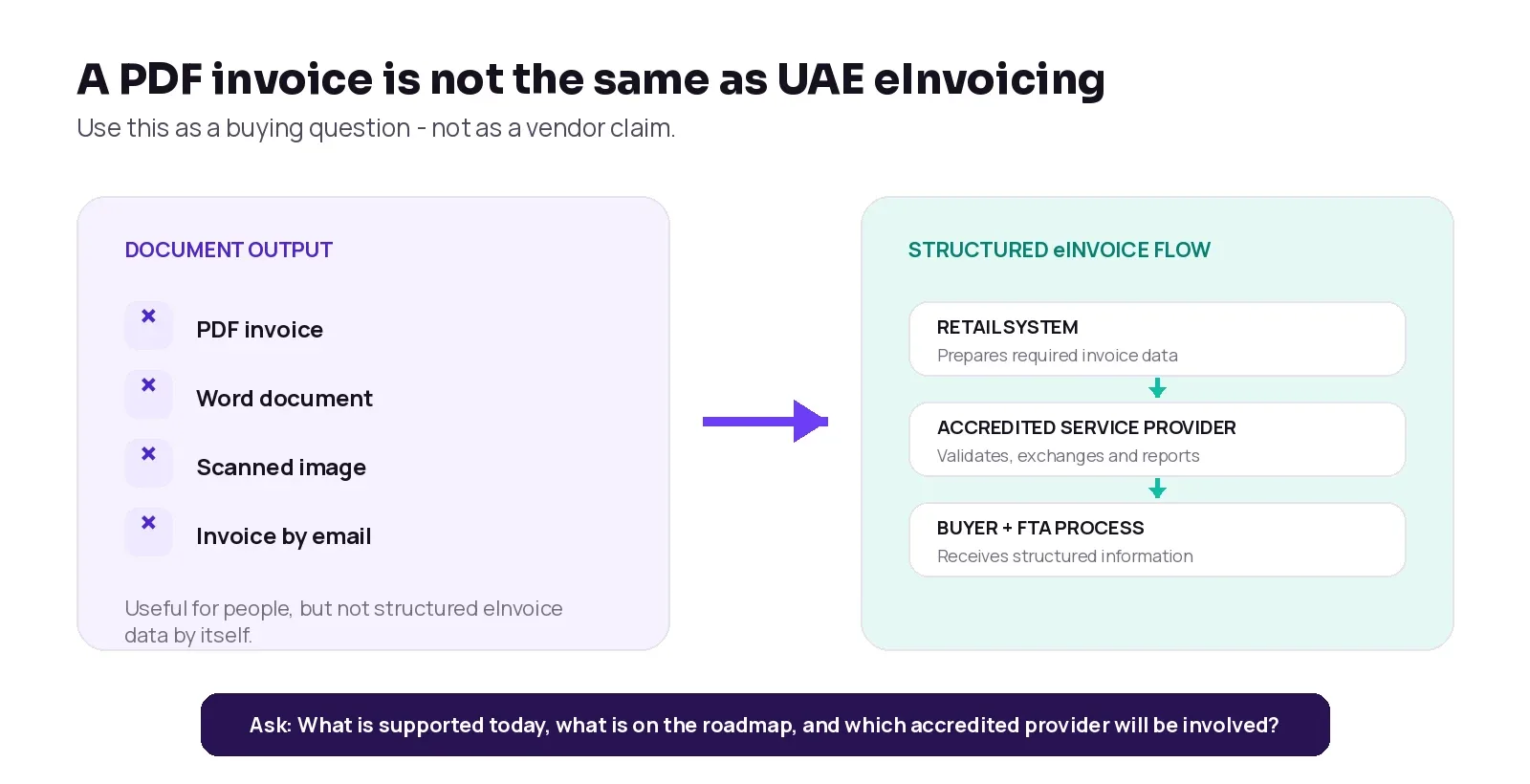
Figure 4. Document output is useful, but structured eInvoice exchange is a different technical requirement.
5. Is it prepared for UAE eInvoicing, rather than only PDF invoices?
Official UAE guidance defines an eInvoice as structured invoice data issued and exchanged electronically and reported to the Federal Tax Authority. It also states that a PDF, Word document, scan, image or email is not an eInvoice by itself.
This does not mean every retail platform must perform every eInvoicing role internally. The practical buying question is how the platform will create the required data, connect to a UAE-accredited service provider where applicable, receive status information and preserve the audit trail. Timelines and technical rules can evolve, so verify the current Ministry of Finance guidance when you make a buying or implementation decision.
Ask the vendor to show:
What is supported today and what is only on the roadmap.
Which accredited service provider or integration model is expected.
How failures, corrections, cancellations and status messages will be handled.
WARNING SIGN
The vendor says a downloadable PDF already makes the platform eInvoicing-ready.
6. Which payment methods are truly available for your UAE merchant account?
A platform may display several payment logos, but availability can depend on the merchant’s legal entity, business category, approval, transaction model, country, currency and channel. Website checkout, mobile apps, POS, payment links and buy-now-pay-later services may have different requirements.
Confirm who signs the merchant agreement, where settlement is paid, who can issue refunds, how fees are charged and what happens if a payment succeeds but the order update fails. The business should normally retain access to its own merchant and settlement records.
Ask the vendor to show:
A live or test payment through the intended channel.
Payment, refund, failed-payment and settlement reporting.
Which fees and approvals are controlled by the gateway rather than the software vendor.
WARNING SIGN
A logo on a slide is presented as guaranteed approval for the business.
7. Can it support English, Arabic and right-to-left experiences properly?
Arabic support is more than translating a few labels. Customer pages may need right-to-left layout, readable typography, Arabic product and category content, Arabic search behaviour, checkout messages and customer notifications. Staff may also need clear bilingual information.
Ask whether translation is manual, AI-assisted or provided by the vendor, and who reviews the final text. Confirm whether the website, apps, invoices, notifications and admin screens all support the required language. A global platform can work well in the UAE, but only when the local customer experience is treated as a real product requirement.
Ask the vendor to show:
An Arabic product page, cart, checkout and order confirmation.
Right-to-left alignment on mobile and desktop.
How untranslated fields, images with text and future content updates are handled.
WARNING SIGN
The vendor calls the system multilingual because a browser translation tool can translate the page.
STORE OPERATIONS
8. Can POS and multi-branch stock work without duplicate records?
A UAE retailer may operate shops, kiosks, pop-ups, preparation locations or delivery branches. The POS should use the same approved catalogue and business data as online channels while still recording the correct branch, staff member, payment method and stock movement.
Ask how transfers, stock adjustments, returns, offline activity and delayed synchronisation work. Also confirm the hardware models that have been tested. “Works on any device” is not a substitute for checking the printer, scanner, cash drawer or terminal used in your shop.
Ask the vendor to show:
A counter sale, online sale, return and branch transfer.
Stock before and after each action at two branches.
A tested list of supported or recommended hardware.
WARNING SIGN
The POS and ecommerce sides use separate stock values that must be reconciled later.
9. Can it manage delivery zones, charges, slots, drivers and proof?
Same-day delivery starts before the driver receives the order. The system should help the business decide whether an address is eligible, what fee applies, which date and time slots are available, which branch prepares the order and when it is ready for dispatch.
Separate delivery management from advanced route optimisation. Driver assignment, navigation, status updates and proof do not automatically mean the platform calculates the best multi-stop route or manages fleet telematics. Ask for the exact supported scope.
Ask the vendor to show:
An eligible and ineligible address.
A scheduled slot, reschedule, failed delivery and return.
Driver assignment, customer updates and proof of delivery.
WARNING SIGN
The delivery demo begins only after a perfect order is already prepared and assigned.
10. Can WhatsApp or phone enquiries become structured, paid orders?
WhatsApp is useful for conversations and custom requests. The problem starts when the chat becomes the only order record. Product details, recipient information, price, payment status and delivery instructions can remain spread across messages and staff phones.
A stronger workflow keeps WhatsApp as the customer channel but creates a structured order in the business system. Staff should be able to confirm the product, price and delivery details, send a payment link where appropriate and continue fulfilment from one order record.
Ask the vendor to show:
A custom WhatsApp order converted into a confirmed order.
A payment link and the status after successful or failed payment.
How chat context or important attachments are retained when needed.
WARNING SIGN
The only solution is copying the same information into another chat or spreadsheet.
11. Can you control roles, cash, purchases, refunds and daily closing?
Retail operations involve owners, managers, counter staff, fulfilment staff, customer service and drivers. Each role should see enough information to do the job without receiving unnecessary permissions.
The system should also make cash and exceptions visible. Ask how staff record cash received, expenses, purchase invoices, refunds, delivery collections and closing balances. A useful record shows who entered or changed the information and when.
Ask the vendor to show:
Owner, manager, staff and driver permissions.
A cash sale, petty-cash expense, refund and daily closing.
Purchase evidence, approval and activity history.
WARNING SIGN
Every user shares one administrator login or can change financial information without a trace.
DATA, IMPLEMENTATION AND SUPPORT
12. Do the reports answer real owner questions, and can you export the data?
A dashboard is useful only when the numbers match operational records. Decide which questions the owner needs to answer daily: revenue by channel and branch, pending orders, failed deliveries, refunds, cash in hand, stock movement, wastage, purchases and product performance.
Ask how report definitions are calculated and whether the business can export products, customers, orders, payments, stock and reports in a usable format. Data portability matters for analysis, accounting, integrations and a future platform change.
Ask the vendor to show:
A report traced back to the underlying orders.
Filters by branch, channel, date, status and payment method.
A sample data export with field names and file format.
WARNING SIGN
The vendor can show attractive charts but cannot explain the source or export the underlying records.
13. How are customer data, privacy, access, backups and incidents handled?
Retail systems may store names, phone numbers, addresses, recipient details, messages, order history and payment references. The UAE has a federal Personal Data Protection Law, and some businesses or jurisdictions can have additional requirements. A software buyer should understand the provider’s role and the business’s own responsibilities.
Ask where data is hosted, who can access it, how permissions and logs work, how backups are tested, how long data is retained and how incidents are reported. Do not accept a badge or a short “secure cloud” statement as a complete answer.
Ask the vendor to show:
A written data-processing and security summary.
Access controls, logs, backup frequency, recovery testing and incident contacts.
Data export, deletion and retention process at contract end.
WARNING SIGN
The provider refuses to explain hosting, backups, administrator access or the exit process.
14. What onboarding, migration, training and ongoing support are included?
Implementation fails when responsibility is unclear. A good proposal states who supplies product data, who cleans it, who configures delivery zones and payments, who tests the workflow, who trains staff and what must be approved before launch.
Ask for a launch plan with owners, dates, acceptance checks and support channels. “Onboarding included” should be translated into specific tasks. Confirm whether support covers questions only, configuration changes, data fixes, integrations or emergency operational issues.
Ask the vendor to show:
A sample implementation plan and data template.
Training for owner, manager, staff and drivers.
Support hours, response targets, escalation path and items billed separately.
WARNING SIGN
The provider promises a launch date before reviewing the data, integrations, approvals and staff availability.
COMMERCIAL CONTROL
15. What is the full first-year cost, renewal cost, contract and exit path?
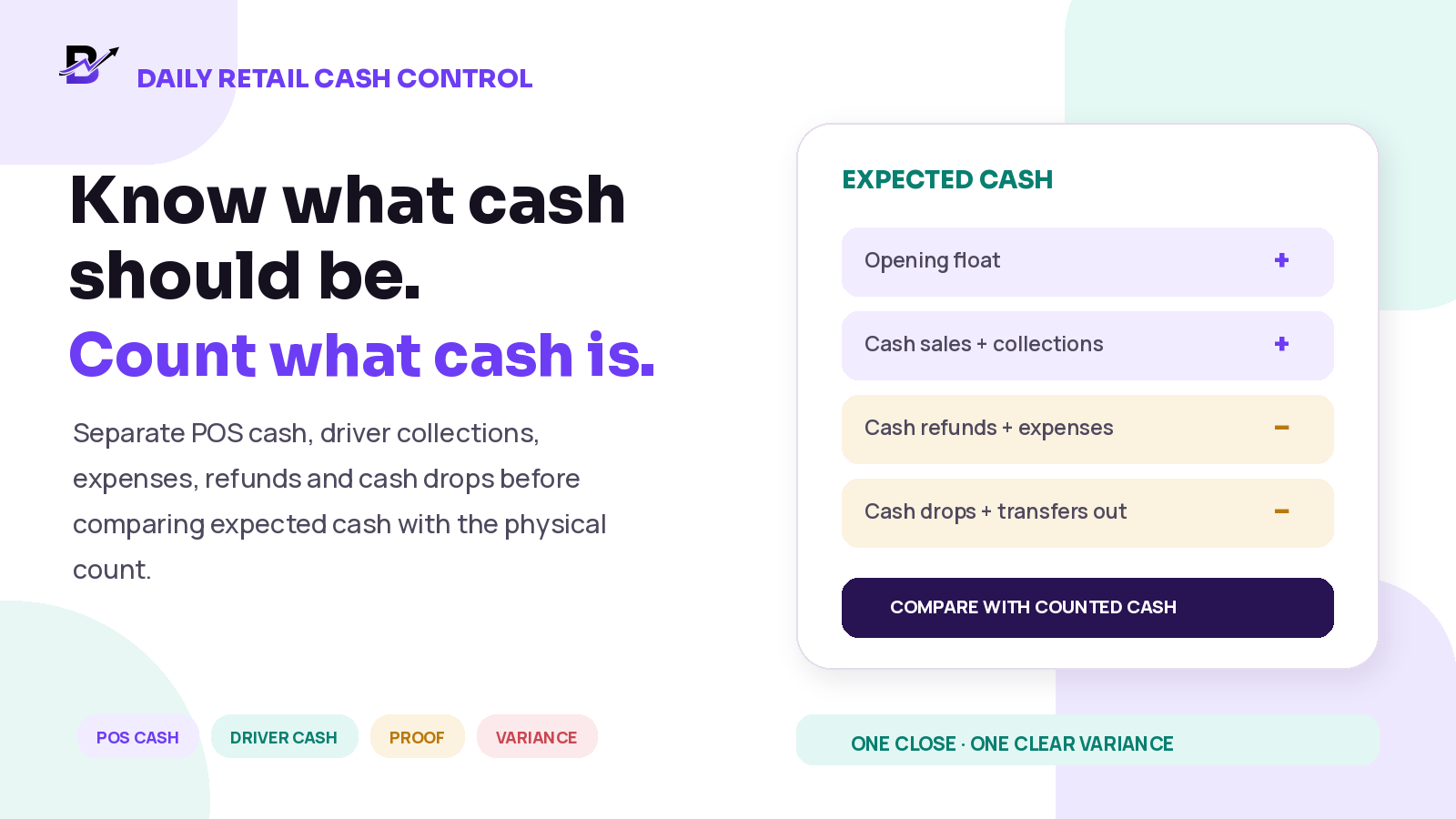
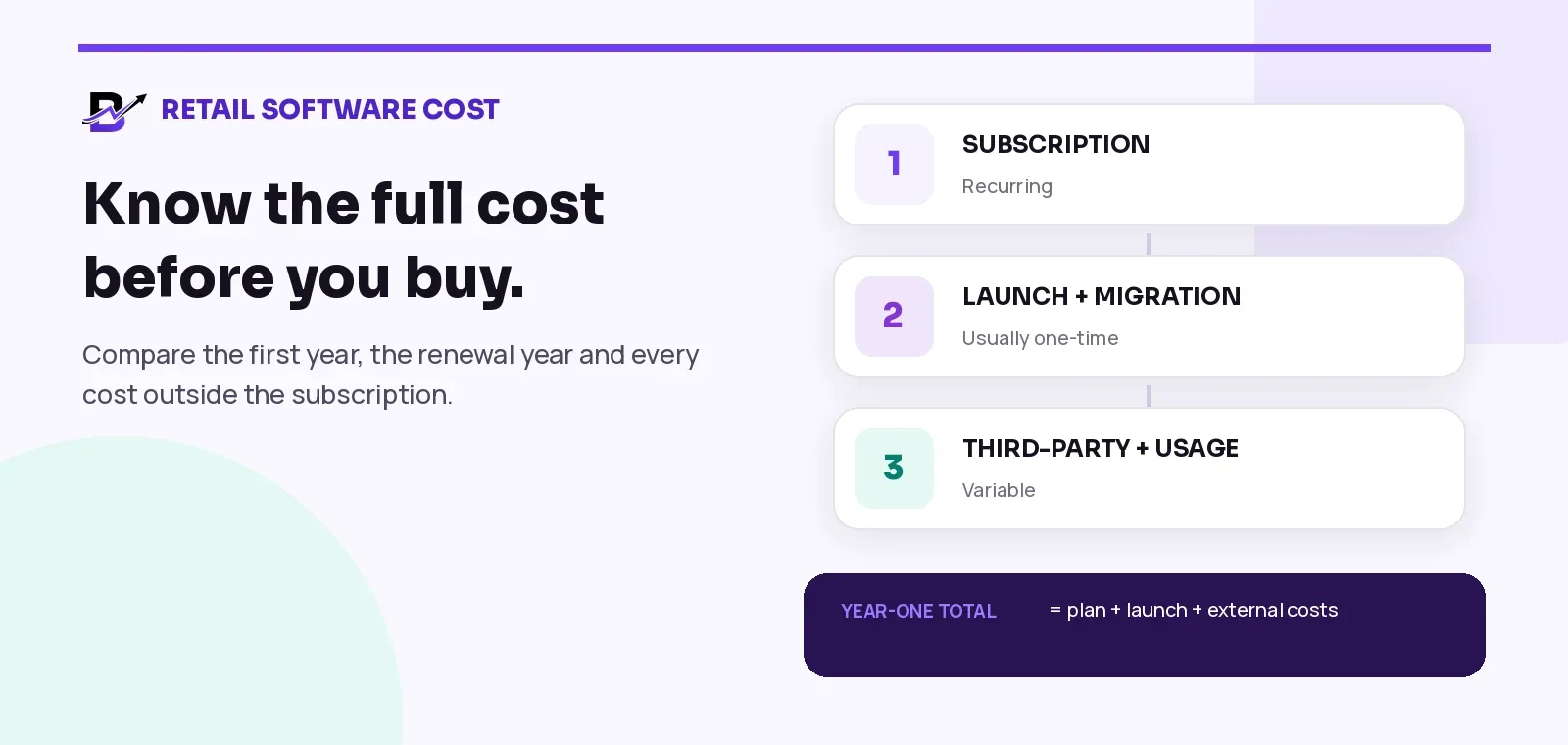
The monthly subscription is only one part of the decision. Add setup, migration, hardware, payment and messaging services, app-store accounts, integrations, training, extra users, branches, support and custom reporting. Compare the complete first-year total with the normal annual cost after launch.
Also review renewal terms, notice periods, price-change rules, data export, account ownership and what happens to the website, mobile apps, domain, merchant account and integrations when the contract ends. The business should know how it can leave before it signs.
Ask the vendor to show:
A written first-year and renewal-year cost model.
Who owns the domain, merchant account, app-store accounts and business data.
Cancellation notice, export format, transition assistance and post-termination access.
WARNING SIGN
The proposal is clear about the monthly fee but silent about ownership, extra usage, renewal and leaving.
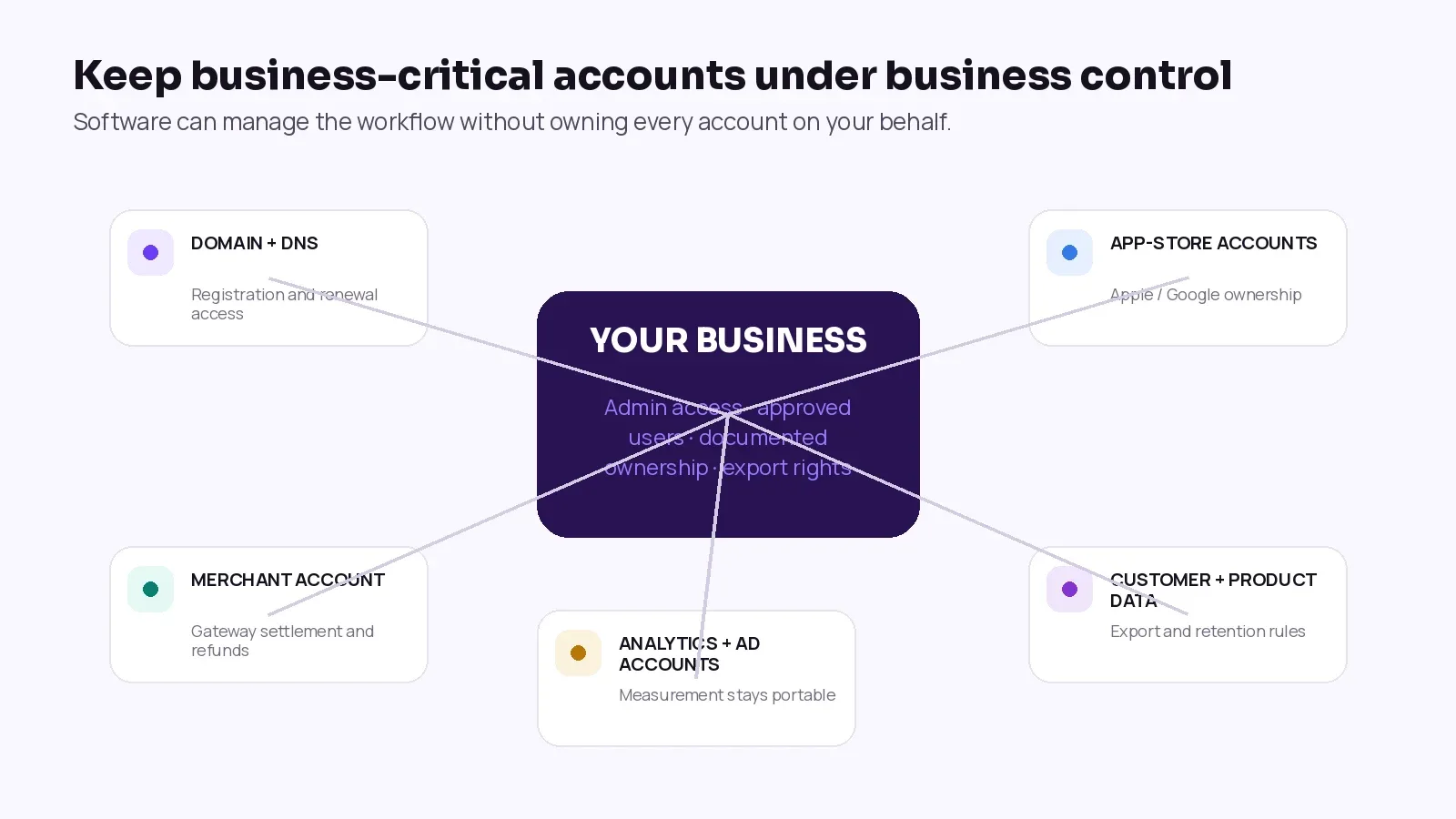
Figure 5. Keep access and ownership clear for accounts that should remain with the business.
A practical UAE demonstration scenario
Take the scorecard into the sales call and ask the vendor to run one realistic scenario. The example below is for a two-branch gifting business, but the method works for florists, bakeries, perfume shops, jewellery brands and other specialty retailers.
STAGE | WHAT THE VENDOR SHOULD DEMONSTRATE |
|---|---|
1. Customer | Selects a gift, adds chocolates, writes a message and chooses a same-day delivery slot. |
2. Payment | Pays online or receives a payment link for a custom price. |
3. Order control | The order appears with product, add-ons, message, recipient, payment and branch details. |
4. Fulfilment | Staff accepts, prepares, quality-checks and records any approved substitution. |
5. Stock and cash | The correct branch records stock movement, payment and any refund or expense. |
6. Delivery | A driver is assigned, updates status and records delivery proof or an exception. |
7. Owner view | The owner can see the sale, payment, branch, stock, delivery and staff timeline. |
DO NOT SKIP THE EXCEPTION
After the normal flow, change the delivery address, remove an unavailable add-on, fail the payment, refund the order or make the recipient unavailable. Exception handling reveals more than a perfect demo.
How Bloomlytix fits this checklist
Bloomlytix is positioned as an AI-powered ecommerce and retail operations ecosystem for florists, gifting brands, cake shops and same-day delivery businesses. Its approved product scope connects customer channels with staff fulfilment, POS, orders, payment links, stock, purchases, cash, delivery and reporting in one platform.
AREA | CURRENT APPROVED BLOOMLYTIX SCOPE |
|---|---|
Connected order journey | Branded website; Android and iOS customer apps by plan; staff and driver app access; POS; order fulfilment; delivery and reports. |
Products and custom orders | Products, categories, sizes, colours, add-ons, greeting messages, manual price adjustments, manual orders and payment links. |
Branches and operations | Branch sales, stock visibility, transfers and adjustments; purchase invoices; cash tracking; roles and staff accountability. |
Delivery | Zones, charges, minimum-order rules, dates, slots, driver assignment, statuses, navigation and proof based on client requirements. |
Languages and payments | Multi-language support where required; gateway options such as Telr, Stripe, Tabby and Apple Pay depend on country, account eligibility and project requirements. |
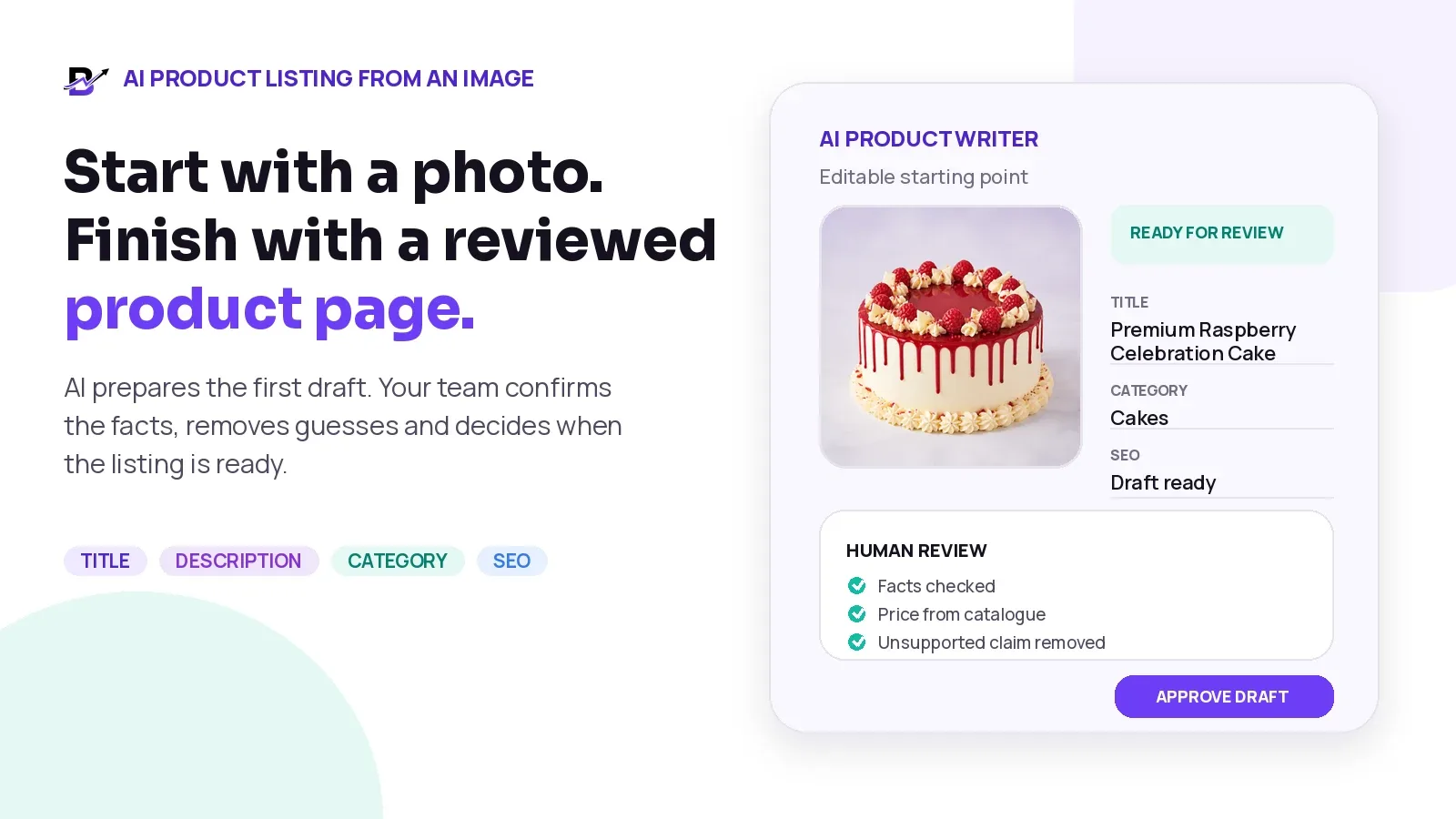
AI growth tools | AI-assisted product upload, descriptions, SEO fields, blogging, translation support and marketing suggestions with review before publishing. |
CONFIRM DURING PROPOSAL
The current Bloomlytix feature document does not by itself confirm every client’s tax configuration, UAE eInvoicing connection, privacy requirement, hardware model, Arabic translation scope, third-party approval or accounting integration. These items must be reviewed and written into the project scope when relevant.
The strongest Bloomlytix demonstration is therefore not a generic tour. Bring one real order, one product with options, one branch or delivery rule and the 15-question scorecard. Ask the team to show what is standard, what requires configuration and what would need separate work.
Frequently asked questions
What is the best retail software in the UAE?
There is no single best platform for every retailer. The strongest choice is the one that fits the full order journey, UAE business requirements, staff workflow, data and budget with the least unclear scope. Use a real-order demonstration and a written scorecard instead of choosing from a feature list alone.
Is a POS system enough for a UAE retailer?
A POS may be enough for a simple counter-only shop. A business with ecommerce, custom orders, multiple branches, delivery, payment links, inventory or customer apps usually needs a wider connected workflow or reliable integrations.
Does retail software in the UAE have to support Arabic?
It depends on the customer base and operating needs. Many UAE businesses benefit from English and Arabic customer experiences. Confirm right-to-left layout, content review, notifications and the exact channels that support Arabic.
What should I ask about UAE VAT and eInvoicing?
Ask your adviser to define the required tax documents and records, then ask the vendor to demonstrate them. Separately, ask how the platform will support structured UAE eInvoicing and any accredited-service-provider connection. A PDF invoice is not the same as an eInvoice.
Can we continue using WhatsApp after implementing retail software?
Yes. WhatsApp can remain a customer conversation channel. The important change is to create a structured order for confirmed product, price, payment, recipient and delivery information so fulfilment does not depend on scattered chats.
Should I choose a UAE company or a global software provider?
Location alone does not prove fit. A UAE provider may offer local support, while a global platform may offer mature technology. Compare the same 15 questions: local requirements, workflow, support, data, cost and written accountability.
How long does retail-software implementation take?
It depends on product data, branches, integrations, payment approvals, customer apps, hardware, training and the quality of decisions. Ask for a project plan after the provider reviews the real scope, not a fixed promise made before discovery.
Your final buying checklist
Write one real order journey before the demonstration.
Score all 15 questions only after evidence or written confirmation.
Separate standard scope, configuration, integration and custom development.
Ask qualified advisers to verify VAT, invoicing, privacy and legal requirements.
Calculate first-year and normal renewal-year cost.
Keep ownership of critical accounts and confirm data export.
Test refunds, failures, stock shortages and delivery exceptions.
Do not sign while important answers remain vague.
Official UAE references for this buying review
RESEARCH NOTE
Official UAE guidance and Bloomlytix product scope were checked on 18 August 2026. eInvoicing rules and provider claims can change, so verify current official guidance before making a legal, tax or implementation decision.